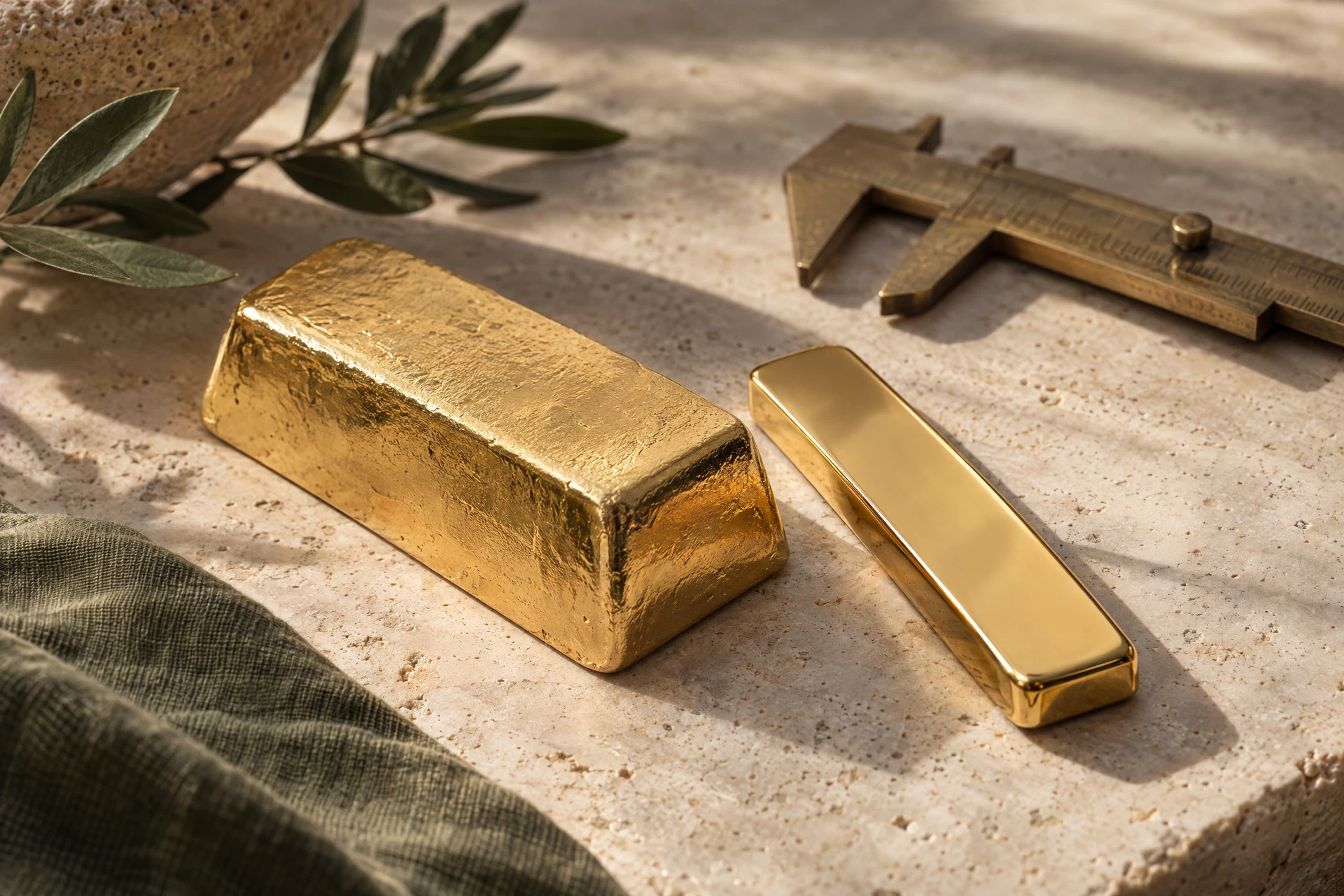
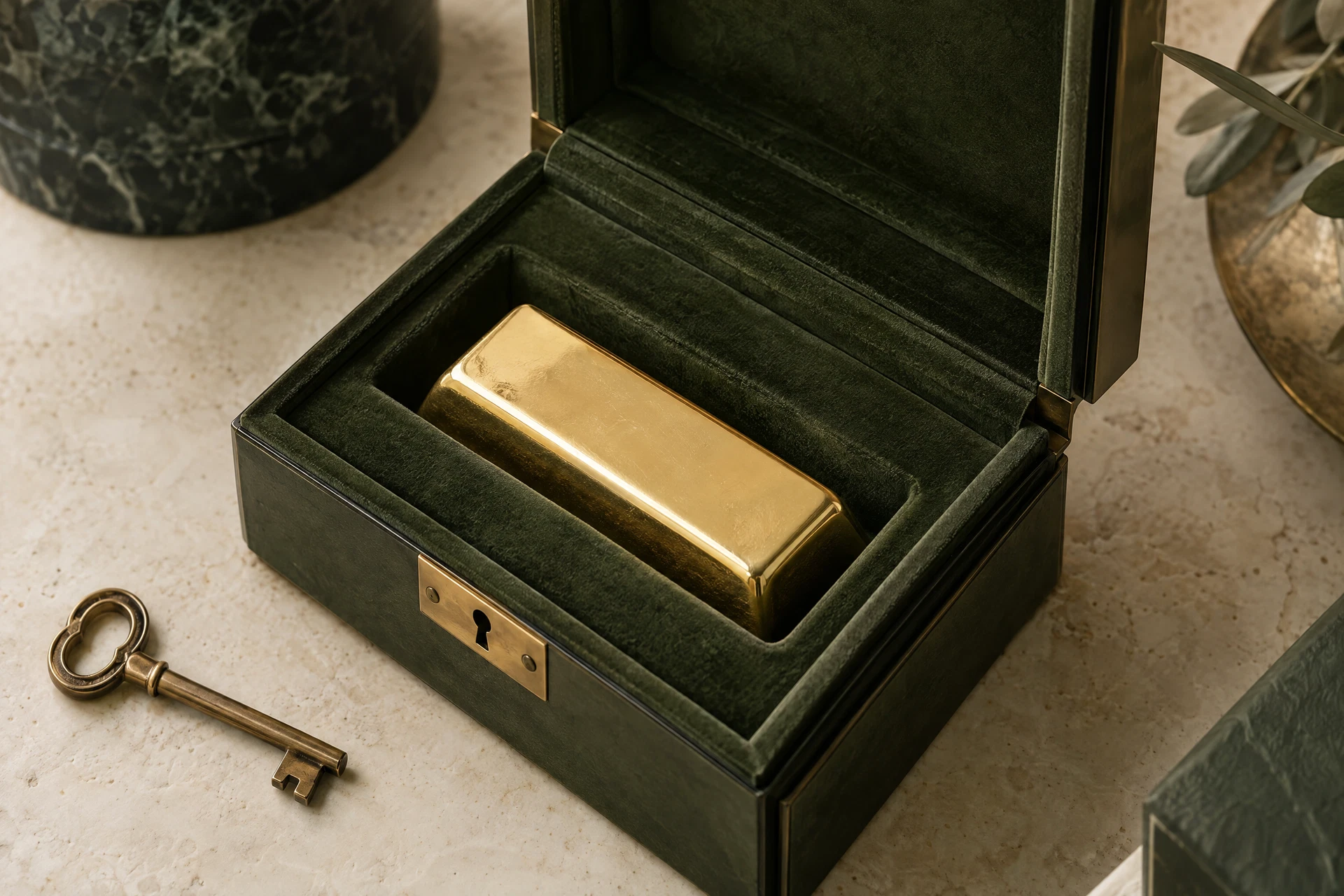
 Illustrative AI-created editorial image. Not a product listing.
- Home storage offers immediate access but makes you responsible for layered security, privacy and continuity.
- A bank locker adds controlled access and a formal access record; read the locker agreement and operating process rather than assuming every bank uses identical terms [1].
- A professional vault may provide custodian reporting and allocated records, but verify whether your gold is individually identified or pooled [3] [7].
- Keep an inventory linking each piece to its invoice, weight, fineness, serial number or certificate, photographs and storage location.
Start with the real decision: access, control and continuity
There is no universally best place for physical gold. The useful question is how you want to balance three practical needs: how quickly you may need to handle the metal, how much security work you want to manage yourself, and how easily an authorised person could understand the records if you were unavailable. Home storage keeps possession close. A bank locker moves the metal into a controlled branch environment. A professional vault adds specialist custody and reporting, usually with less direct access.
Treat storage as two linked systems: physical protection and an information record identifying each item. A strong safe without an inventory creates confusion; a perfect list cannot protect a bar. Compare access, privacy, handling, custody records, fees, withdrawal and continuity. No option removes every risk.
Home storage: direct control, direct responsibility
Home storage can suit a small amount that you may genuinely need to access, provided the household can keep its existence private and maintain consistent security. Think in layers: a properly installed safe, restricted knowledge, strong entry controls, protection from damp and heat, and a written plan for who should locate the records. Avoid leaving loose bars or coins in obvious drawers, and avoid describing the hiding place in the inventory itself. The aim is controlled access, not a dramatic secret compartment.
Handle the metal as little as possible, retain original capsules or tamper-evident packaging where supplied, and store documents separately but securely. Photograph identifying marks privately. A hypothetical three-item inventory might record weight, fineness, serial number, purchase date, invoice reference and a location code for each. Use your own exact details.
Bank locker: structured access, not a substitute for reading the agreement
A bank locker can reduce the need to maintain a high-security storage area at home, while giving you a defined process for entry. In India, the Reserve Bank of India revised its safe-deposit-locker instructions in August 2021, with the revised instructions applying from 1 January 2022. The framework covers customer due diligence, a model agreement, locker operations, nomination, settlement of claims and bank liability; the bank must give the locker hirer a signed copy of the agreement [1].
Ask how identity is checked, who may operate the locker, how access is recorded, what happens after a lost key or password, and how nomination works. RBI says banks should record who opened and closed a locker and when, while protecting privacy during use [1]. The bank does not catalogue the contents, so keep your own inventory. Illegal or hazardous items are prohibited by the agreement [1].
Professional vault: custody and reporting are part of the product
A professional vault is designed for customers who prefer specialist custody, controlled handling and account-based reporting over keeping metal at home. The World Gold Council defines vaulted gold as physical gold stored for a customer in a professional vault with associated record-keeping and reporting; it can be allocated or pool-allocated [3]. That distinction matters. Allocated storage generally means specific bars or coins are credited to the holder, while pool allocation represents co-ownership in a pool rather than a particular bar [3].
Ask whether your statement names particular bars or coins, shows a pooled quantity, or records only a balance with an intermediary. Check deposit records, reconciliation, delivery, fees and closure. The Royal Mint says its own service links unique serial numbers to fully allocated holdings and shows inventory online; that describes its service, not every vault [7].
What to record for every bar, coin or jewellery item
Record the seller, invoice number, date, product, stated weight, fineness and payment reference if useful. Add the serial number, refiner or mint, assay or certificate number, dimensions where available, and private photographs of the item and packaging. The Royal Mint says some of its bars use security packaging whose unique number matches the bar [6]. The Perth Mint recommends checking specifications, security features and tamper-evident packaging [8].
For larger bars, LBMA lists a serial number, refiner assay stamp, fineness and year of manufacture, and says unique serial numbers should be linked to inventory lists for traceability [5]. Keep invoice and certificate copies in encrypted storage, with a second copy elsewhere. Do not put the full address or safe combination in a broadly shared file.
A practical comparison before you choose
Choose home storage when immediate personal access is important and you can maintain privacy, installation quality and a continuity plan. Choose a bank locker when you prefer branch-controlled access and can work within the bank’s hours, documentation and agreement. Consider a professional vault when you value specialist custody, account reporting and the possibility of organised delivery or withdrawal more than frequent personal access. None of these descriptions is a recommendation to buy gold or a promise about value.
A hypothetical comparison could score each option from 1 to 5 for access, privacy, record quality and personal effort. These scores are a decision aid, not a measured safety rating.
Build a continuity routine, not just a hiding place
Review the inventory after every purchase, transfer, sale or custodian change. Once a year, compare items with the list and check that photographs and certificates remain readable. Keep locker details and nomination information in wider estate records, not only inside the locker. RBI addresses nomination and settlement after death, showing why access planning matters [1].
Keep the plan discreet. Tell a trusted person where the records are and whom to contact, without broadly sharing quantity or exact location. Update the checklist when a custodian changes its terms or delivery process.
Questions readers ask
Is a bank locker automatically safer than keeping gold at home?
Not automatically. A locker changes the security and access process, but you still need to understand the agreement, maintain your own inventory and plan for authorised access. Compare the controls and the practical fit for your household rather than relying on a blanket ranking [1].
What does allocated storage mean?
Allocated storage links particular identified bars or coins to the holder. The World Gold Council contrasts it with pool-allocated gold, where the holder owns a share of a pool rather than a specific bar [3]. Ask the provider exactly what your statement identifies.
Which documents should I keep for physical gold?
Keep the invoice, product description, weight, fineness, serial number or certificate reference, photographs, packaging notes, storage receipt or statement, and a dated record of transfers. Protect digital copies and limit who can see location details.
Sources & editorial notes
- [1] Safe Deposit Locker / Safe Custody Article Facility provided by the banks—Revised Instructions — Reserve Bank of India · 2021-08-18
- [2] RBI extends time for renewal of agreements for existing Safe Deposit Locker / Safe Custody Article Facility — Reserve Bank of India · 2023-01-23
- [3] Digital Gold: The Case for a Shared Infrastructure — Glossary — World Gold Council · 2026-03-19
- [4] Gold Bar Security Features — London Bullion Market Association · n.d.
- [5] London Good Delivery—Gold and Silver — London Bullion Market Association · 2017-07-01
- [6] How can I be sure of the purity of the products I purchase? — The Royal Mint · n.d.
- [7] Vaulting FAQs — The Royal Mint · n.d.
- [8] How to avoid buying fake coins and bars — The Perth Mint · n.d.
Named references are provided for context. This is independent educational writing, not an endorsement or personalised investment advice.
Our editorial policyThis is general education, not personal financial, legal or tax advice. Gold prices and ownership costs can change. Read the disclaimer.